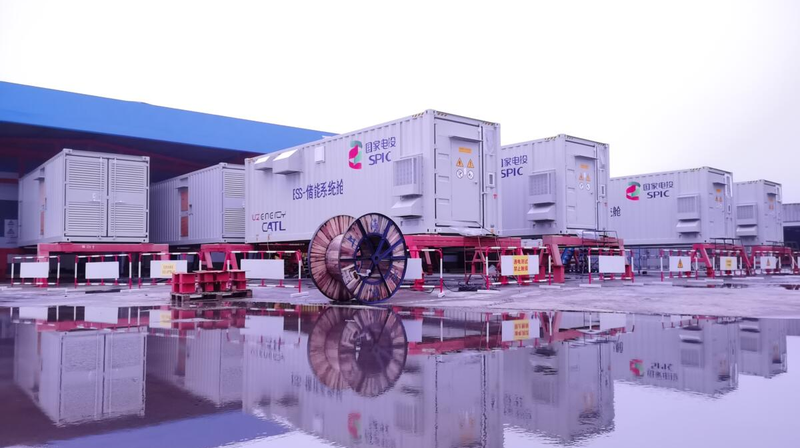
Europe’s battery storage market reached a new milestone in 2025, with around 36 GWh of new capacity deployed and cumulative installations surpassing 100 GWh for the first time, according to SolarPower Europe. The most notable development, however, was not only the scale of deployment, but a shift in market structure, as utility-scale projects became the largest contributor to new storage growth across the region. This change reflects a broader transition in how battery storage is being used within Europe’s power system rather than a slowdown in residential demand.
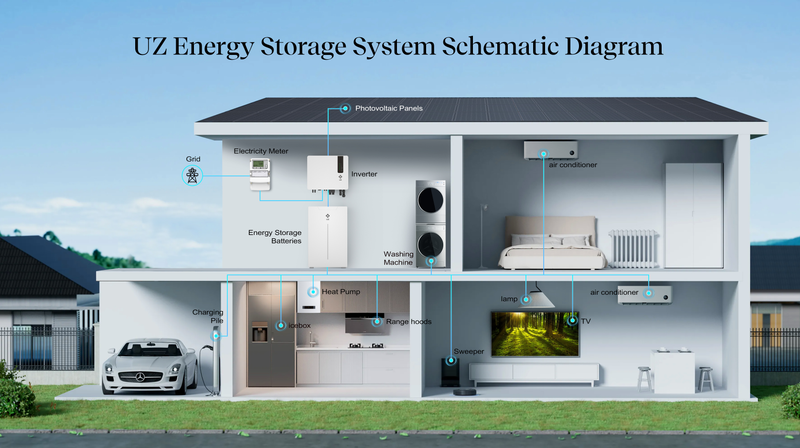
Residential storage continues to grow in mature solar markets such as Germany and Italy, where batteries are widely used to increase self-consumption and reduce exposure to retail electricity prices. However, its relative contribution to new capacity is gradually changing as system-level requirements become more important in shaping investment decisions.
A market shift driven by system conditions rather than demand decline
The shift in Europe’s storage market is closely linked to changes in how the power system is operating under high renewable penetration. Solar generation has expanded rapidly across major European markets, while transmission expansion and system flexibility have developed at a slower pace. As a result, periods of oversupply are becoming more frequent, particularly during midday hours when solar output is highest.
In several markets including Germany, Spain and parts of Western Europe, wholesale electricity prices increasingly fall toward zero or into negative territory during these periods. At the same time, grid operators are required to curtail renewable generation when transmission constraints prevent efficient redistribution of electricity across regions. Recent market reporting has indicated that Germany and Spain curtailed several terawatt-hours of solar generation in 2026 due to grid limitations, while solar capture prices have continued to decline as additional midday generation reduces the value of electricity at peak production hours. These developments suggest that the key constraint in Europe’s energy system is shifting from generation capacity toward system flexibility, defined as the ability to absorb, shift and dispatch electricity across time.
Utility-scale storage as a system-level flexibility asset
This changing system environment explains why utility-scale storage is growing faster than residential deployment. Unlike residential batteries, which operate behind the meter and optimize household consumption, utility-scale systems are directly integrated into wholesale electricity markets and grid operations. Their role extends beyond energy shifting and now includes services such as frequency regulation, reserve capacity, congestion management and voltage support.
At the same time, the commercial structure of utility-scale storage has evolved. Early projects relied primarily on energy arbitrage, but new developments increasingly depend on stacked revenue models combining ancillary services, capacity mechanisms and wholesale market participation. This diversification has made large-scale storage more resilient to price volatility while also increasing its attractiveness to institutional investors.
Project design is also changing accordingly. Solar and storage are increasingly being developed as integrated hybrid systems rather than separate assets. This approach improves grid connection efficiency, reduces curtailment risk and allows developers to optimize revenue across different market conditions. In several European markets, co-located solar-plus-storage projects are becoming a standard development approach rather than a niche strategy.
This shift is also visible in broader industry discussions. Across major industry events such as Intersolar Europe, conversations have gradually moved away from cell-level improvements and battery specifications toward hybrid power plants, energy management systems, digital optimization and grid integration. The focus is increasingly on how storage behaves within the power system rather than how individual batteries are designed.

Residential storage remains important but follows a different logic
Residential storage continues to play an important role in Europe’s distributed energy landscape, but it operates under different drivers. Household systems are primarily shaped by self-consumption optimization, rooftop solar adoption and retail electricity price dynamics rather than wholesale market structures or grid constraints.
As residential markets mature in countries such as Germany and Italy, growth patterns are becoming more stable compared with the rapid expansion seen during the energy price spikes of 2022 and 2023. This does not indicate weakening demand, but rather a transition from early-stage adoption to a more mature phase of deployment.
The key distinction is that residential and utility-scale storage respond to different layers of the energy system. Residential systems optimize energy use at the consumer level, while utility-scale systems respond to system-wide balancing requirements. As renewable penetration increases, system-level flexibility requirements are growing more quickly than household-level optimization needs.
Europe is entering a flexibility-driven phase of the energy transition
The divergence between residential and utility-scale storage reflects a broader shift in Europe’s energy transition. Each additional gigawatt of solar and wind capacity increases the importance of flexibility within the power system. In markets with high renewable penetration, the ability to shift electricity across time is becoming more valuable than simply increasing total generation capacity.
In some cases, battery storage is already beginning to complement or partially replace traditional peaking generation assets by providing faster and more precise balancing services. This reflects a broader structural evolution in how electricity systems operate under high shares of variable renewable generation.
Europe has already demonstrated that it can scale renewable generation rapidly. The next phase of the transition will depend on how effectively that generation can be integrated and balanced within the power system. The growing dominance of utility-scale storage reflects this shift. It is not a replacement of residential storage, but an indication that flexibility has become the key constraint shaping investment, system design and market structure across Europe’s electricity sector.