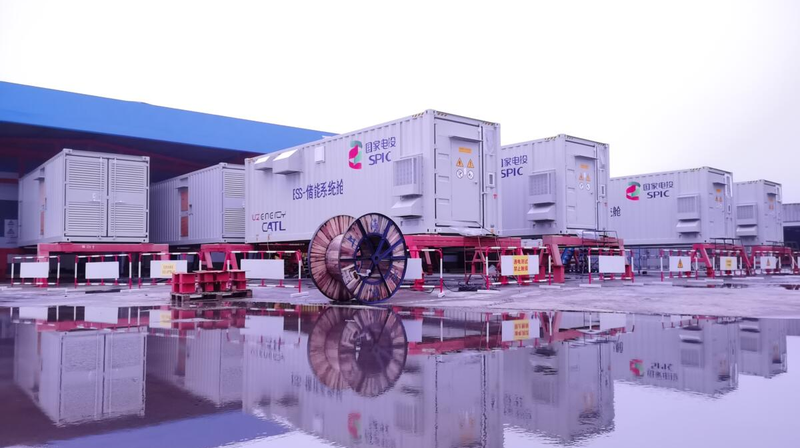
UZ Energy deployed a 1 MW/2.088 MWh commercial and industrial battery energy storage system (BESS) at a factory in Bulgaria. The project combines battery storage with an existing 890 kWp solar installation and is designed around the factory's actual load profile, tariff structure and operating schedule.
Installation was completed on August 12, 2026. According to UZ Energy's project documentation, the factory operates continuously, with a maximum load of approximately 870 kW and a typical load of about 200–300 kW. The battery system can charge or discharge at up to 1 MW and stores 2.088 MWh of energy.
Those two ratings describe different parts of the design. The 1 MW figure is the system's power capability: how quickly it can charge or discharge. The 2.088 MWh figure is its energy capacity: how much electricity it can hold. At full rated power, the nameplate values correspond to slightly more than two hours of duration, although actual dispatch duration depends on operating limits, efficiency, state of charge and site conditions.
Coordinating storage with factory demand and solar production
The operating strategy is intended to shift part of the factory's electricity consumption away from higher-cost periods. Under the current dispatch assumptions, the system is expected to charge with approximately 1.9 MWh during lower-cost periods and discharge during peak-price periods to support factory loads.
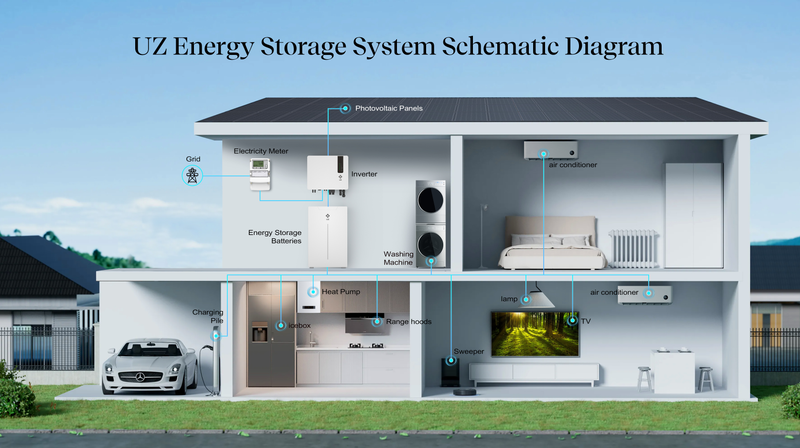
The battery also works with the site's 890 kWp photovoltaic system. When solar production exceeds immediate on-site demand, available electricity can be stored rather than exported or curtailed, subject to the site's electrical configuration and operating limits. The stored energy can then be used after PV output falls or when grid electricity is more expensive.
This does not mean that a battery automatically produces the same result at every industrial site. Savings depend on the load profile, solar generation, tariff design, round-trip efficiency, battery degradation, reserve requirements and the control strategy used by the energy management system. The battery must be scheduled around the factory's real operating constraints rather than dispatched solely in response to a simple price signal.
Project economics depend on operating assumptions
Based on the site's current operating strategy and assumed peak-to-off-peak electricity-price spread, UZ Energy's project estimate indicates potential gross arbitrage value of approximately €290–€320 per day. On the same assumptions, annual gross value could exceed €100,000.
These figures are estimates, not guaranteed savings. Actual results may vary with electricity prices, demand patterns, solar production, usable battery capacity, conversion losses, degradation, maintenance, availability and changes to the dispatch strategy. Gross arbitrage value also does not represent project profit because it does not deduct capital, financing, operating or replacement costs.
The project has been planned around an operating horizon of approximately 10–15 years, subject to usage, environmental conditions and maintenance. Long-term performance therefore depends on more than the initial battery capacity. Thermal management, state-of-charge limits, cycling frequency and control settings all influence how much usable value the system can provide over time.
Bulgaria is expanding electricity-storage infrastructure
The factory project is being deployed as Bulgaria increases investment in renewable-energy integration and electricity storage. The European Commission states that Bulgaria's recovery and resilience plan includes €1.5 billion of investment in renewable energy, electricity storage and interconnection capacity.
At grid scale, the country's National Infrastructure for Storage of Electricity from Renewable Sources (RESTORE) investment is supported by €603 million from the EU Recovery and Resilience Facility. The program is intended to support the installation and commissioning of distributed grid-scale storage facilities with a combined 3,000 MWh of usable energy capacity.
That national program and this factory installation operate at different scales, but they respond to the same underlying need: electricity supply and demand do not always occur at the same time. Grid-scale storage supports system flexibility, while behind-the-meter industrial storage can coordinate a site's demand, solar generation and exposure to time-varying electricity prices.
What the project demonstrates
The Bulgaria installation shows why industrial storage design must start with the site rather than with battery capacity alone. A useful design needs a clear view of maximum demand, typical load, solar production, tariff periods, available connection capacity and the operating reserve required by the facility.
For this project, the 1 MW/2.088 MWh battery is configured to work alongside a 24-hour industrial load and an existing 890 kWp PV system. Its purpose is to give the factory more control over when electricity is drawn from the grid, when solar energy is stored and when the battery is discharged. The result will ultimately be determined by measured operating data, not by nameplate capacity alone.