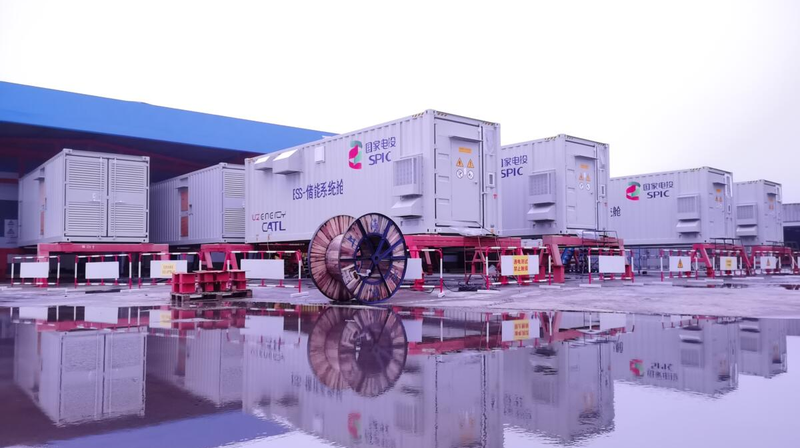
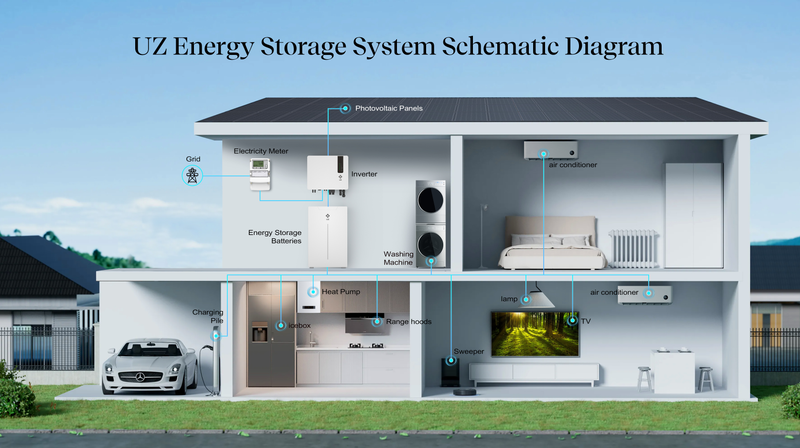
Data centers are broadening battery demand beyond conventional uninterruptible power supply. AI workloads, higher rack power density and grid-connection constraints are creating interest in onsite storage, but backup, ride-through, peak management and energy shifting require different designs.
Data-center batteries have traditionally been associated with uninterruptible power supply (UPS): they bridge short interruptions and support orderly transfer to another source. That role remains important, but it is not the same as a multi-hour battery energy storage system designed for peak management or grid participation.
AI changes the power profile, not only annual consumption
The International Energy Agency estimated data centers used about 415 TWh of electricity in 2024. Its 2026 update projects consumption rising from about 485 TWh in 2025 to roughly 950 TWh in 2030. The important engineering issue is not only the annual total. AI-focused facilities can create large and rapid power swings, while higher rack densities increase the consequences of a disturbance at the site level.
That changes the questions asked of storage. A UPS may need extremely fast response and high reliability for a short interval. A battery used to limit a site's peak import must sustain power for longer and follow a tariff or demand-control strategy. A system intended to support a constrained grid connection may need still more energy, coordinated dispatch and clear rules governing when it can charge.
Four use cases should not be collapsed into one
First, ride-through storage protects critical IT loads during short disturbances. Second, backup storage supports the transition to longer-duration generation or another supply. Third, peak management limits rapid or expensive grid imports. Fourth, grid-interactive storage may respond to external signals where interconnection rules and market arrangements permit it.
Those functions can overlap, but each changes sizing, redundancy, degradation and controls. Reserving all stored energy for emergencies limits commercial dispatch. Using the battery frequently for peak reduction consumes part of its cycling budget and may reduce the reserve available for backup. A credible design must state which obligation has priority.
Grid connection is another boundary. A battery can reduce a short peak or smooth a ramp, but it cannot permanently replace the energy and firm capacity required by a large facility. If the site's average demand is above the approved connection level for long periods, storage eventually runs out unless another local source replenishes it. Transmission, substations and generation remain the durable solution to sustained load growth.
The buyer is purchasing availability, not only capacity
For a data center, a nominal megawatt-hour rating says little by itself. The buyer needs to know available power at the required state of charge, the duration that can be sustained, transfer behavior, fault response, maintenance strategy and how the battery coordinates with generators, utility supply and onsite generation.
The control hierarchy also matters. Facility power controls, UPS controls, the battery management system and any energy-management platform need defined responsibilities. A market dispatch or tariff response should never consume a reserve that the reliability design assumes is available. That boundary has to be enforced automatically and tested under degraded communications as well as normal operation.
Procurement therefore needs separate performance tests for each duty. Ride-through tests should verify transfer and critical-load continuity. Peak-management tests should verify sustained output and metering. Grid-service claims need the applicable interconnection approval and a way to measure delivery. Combining the tests into one generic efficiency figure hides the risks that matter to the operator.
Data centers are therefore expanding the storage market, but they are not turning every battery into the same product. The commercial opportunity sits in matching a precisely defined reliability or power-management requirement with a system that can prove its availability under real operating constraints.