Masdar and EWEC's announced Abu Dhabi project combines 5.2 GW of solar PV with 19 GWh of battery storage and targets up to 1 GW of continuous renewable delivery. It is a useful illustration of dispatchability—but remains a project-specific design, not a universal cost benchmark.

Why dispatchability, not installed capacity, is becoming a sharper measure of renewable energy value
Masdar reached financial close this month on a project that would have sounded implausible a few years ago: 5.2 gigawatts of solar paired with 19 gigawatt-hours of batteries, engineered to deliver 1 gigawatt of continuous power, 24 hours a day, in Abu Dhabi. Do the arithmetic and two numbers fall out that the headline "5.2GW / 19GWh" doesn't show: a 5.2-to-1 overbuild ratio between panels installed and power actually promised, and a battery bank large enough to discharge at full power for the better part of a day. Both numbers turn out to matter more than the topline figures. The company is calling the project the world's first gigascale round-the-clock renewable energy project. At $6.1 billion, financed by a 13-bank consortium, it's also one of the largest single bets yet that solar-plus-storage can be sold as firm, scheduled power rather than as a purely daytime resource.
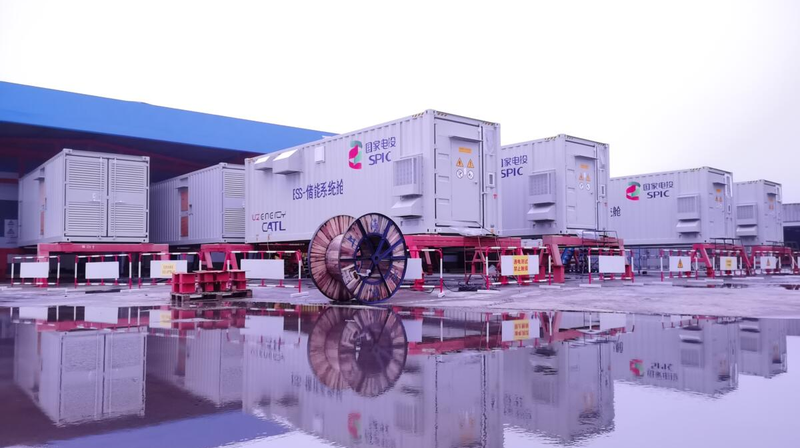
What makes the project interesting isn't just its size. It's what had to be built alongside the panels and batteries to make "round-the-clock" a bankable promise rather than a slogan: a virtual power plant layer, grid-forming inverters, black-start capability, and AI-driven forecasting and dispatch. CATL is supplying part of the battery system; BYD recently landed a contract for 11.275 gigawatt-hours of it, one of the largest single battery-storage procurements on record. None of that shows up in the "5.2GW / 19GWh" headline number, but it's most of what the project actually is.
That distinction — between how much a system can generate and how precisely it can be commanded to deliver — is what the industry has started calling dispatchability. And Masdar's project is a useful place to start, because it shows both how far the concept has come and how expensive it still is to achieve at scale.
Capacity Was Never the Whole Story — Now the Market Is Pricing That In
For most of solar's growth, capacity and value moved together: more installed megawatts meant more electricity generated meant more revenue. That relationship is breaking down, and Europe's power markets are showing exactly how.
Germany logged 573 hours of negative electricity prices in 2025, a 25 percent jump from the year before; Spain's negative-price hours have more than doubled since 2024. The mechanism is simple — solar output floods the grid at midday, demand doesn't rise to meet it, and wholesale prices fall below zero because there's more clean power on the system than anyone wants at that moment. Consultancy Enervis found that close to 28 percent of Germany's potential solar generation between January and May 2025 occurred during negative-price hours, and warned that current PPA premiums for storage-backed solar are often too thin to make the economics work.

This is the same mechanism Masdar's 5.2-to-1 overbuild ratio has to absorb, just internalized inside one project instead of spread across a grid. Near peak sun hours, most of that generation exceeds the 1-gigawatt firm commitment — the kind of midday surplus that, on a typical European grid, is exactly what pushes prices negative. Masdar's answer is to route as much of that surplus as the battery system can absorb into the 19-gigawatt-hour bank, rather than exporting it into a market that doesn't want it yet — using storage to buy back control over a surplus that, left alone, would otherwise show up as lost revenue.
In other words, generating electricity at the wrong hour isn't just an inconvenience anymore — in an increasing number of European markets, it actively loses money. That's a sharper argument for dispatchability than the abstract "duck curve" framing usually gets: the timing mismatch between solar generation and demand has started showing up directly on the income statement, not just on a load chart.
Why Masdar Didn't Wait for a Capacity Market to Value This
Most grid operators already have a formal way of pricing how much a variable resource like solar is actually worth toward keeping the lights on. It's called effective load carrying capability, or ELCC — the methodology CAISO, PJM, and other system operators use to discount solar and storage's contribution to resource adequacy as penetration rises. The logic is straightforward: the first gigawatt of solar on a grid is worth close to its full nameplate capacity, because it's covering hours that were previously unmet. The hundredth gigawatt is worth much less, because by then the grid already has plenty of midday power and what it's short of is evening capacity. The decline can be steep: CAISO's capacity credit for solar has fallen sharply since 2018 as penetration climbed, and PJM's own market monitor found solar rated at 20 percent of nameplate under an average ELCC method but just 1.3 percent under a marginal one — the more accurate measure of what the next unit of solar is actually worth to the grid.
Masdar's project, whether or not this was the explicit intent, effectively sidesteps that discounting mechanism. Rather than building solar, connecting it to a capacity market, and accepting whatever ELCC value a grid operator assigns it, Masdar and EWEC built enough overbuild and storage to make a direct, bilateral, 24/7 delivery commitment — functionally approximating close to full capacity value through contract structure rather than through a statistical discount. Read that way, it's a meaningfully different way of monetizing reliability than the ELCC-based capacity markets common in the US and parts of Europe, and one only viable because the project's scale and financing let it absorb the cost of building far more solar and storage than a formal capacity-market bid would require.
The 19-gigawatt-hour battery bank is a similar story of scale doing the work — though the arithmetic carries two caveats a spec sheet wouldn't volunteer. Nineteen gigawatt-hours divided by 1 gigawatt gives a theoretical ceiling of roughly 19 hours of full-power discharge, but that assumes no losses. Manufacturers typically cite round-trip efficiency for lithium systems in the 85-to-95-percent range; some independent field measurements put real-world efficiency closer to 70 percent once inverter losses and thermal management are counted. The usable duration in practice sits somewhere below the theoretical ceiling — how far below depends on which figure applies to this specific system. Total energy capacity also isn't the same as charging power: how much of the midday surplus actually gets absorbed rather than curtailed depends on the battery's maximum charge rate, not just how many gigawatt-hours it can eventually hold. Neither caveat changes the order of magnitude. Even generously discounted, a system built for the better part of a day of discharge is a different category of asset than the 2-to-3-hour systems that make up most grid-scale storage fleets today, including in markets like Australia, where short-duration batteries have struggled to cover multi-day heat events — the difference between helping the evening ramp and actually replacing baseload generation.
What "Dispatchable" Actually Requires
Dispatchability doesn't mean a solar-plus-storage project behaves exactly like a gas plant. It means the system can be told what to deliver, and when, with enough accuracy that a grid operator or buyer can plan around it. In practice that depends on a handful of things capacity numbers don't capture:
Forecast accuracy — how well the system predicts its own output hours or days ahead, since dispatch commitments are only as good as the forecast behind them. Response speed — how quickly storage and inverters can react when actual conditions diverge from plan. And the services a system can provide beyond raw energy: frequency response, voltage support, and — as Masdar's project includes — the ability to restart part of the grid from a dead stop (black start), which purely intermittent solar cannot do at all.
This is why Masdar built a virtual power plant and AI dispatch layer on top of the battery bank rather than relying on capacity alone. Duration determines how long a system can keep delivering; it doesn't determine how accurately that delivery can be forecast or how fast the system reacts when reality diverges from plan. Those are what a grid operator, or an AI data center with essentially zero tolerance for interruption, actually needs.
Dispatchability Isn't Free, and Not Every Buyer Can Afford It Yet
It's worth being honest about what round-the-clock solar costs. Masdar's project represents roughly $6.1 billion for every gigawatt of firm, round-the-clock capacity it delivers — a figure that reflects not just the battery hardware but the forecasting, control, and grid-service infrastructure layered on top of it, and one that dwarfs the cost of a gigawatt of conventional solar capacity alone. That's a very different economic proposition from a standard solar PPA, and Enervis's research suggests the market hasn't fully caught up: PPA premiums for storage-backed, dispatchable solar are frequently too low to cover the added cost, which helps explain why so few projects have attempted round-the-clock delivery at this scale before Masdar's.
Nor is every market positioned to pay that premium. Abu Dhabi's project only pencils out because of the scale of committed capital, low-cost financing, and, reportedly, a buyer base — AI data centers and advanced manufacturing — willing to pay for reliability rather than just clean electrons. EWEC's own framing of the project leans on exactly this logic: its CEO has described Abu Dhabi as a global hub for artificial intelligence that this project is meant to help power. Smaller developers and less capital-rich markets are, for now, mostly priced out of true 24/7 renewable delivery, and are more likely to rely on shorter-duration storage that shifts solar by a few hours rather than around the entire clock.
One question the public announcements haven't answered is the statistical basis of the 1-gigawatt commitment itself — whether it's engineered as a P50 figure (the output the system is expected to average) or something closer to P90 (output achievable with 90 percent confidence even in a worse-than-average year). That distinction determines how much of the overbuild and storage is there to hit an average target versus to guarantee performance in a bad year, and it materially changes how a lender or offtaker should price the project's risk. It's the kind of detail that matters enormously to project financing and rarely makes it into headline coverage of a deal this size.
Where This Leaves Project Evaluation
None of this makes installed capacity irrelevant — the world still needs a great deal more solar and storage built, and megawatts remain the starting point for any project. But Masdar's project, and the negative-price data building up behind it, point to a more precise standard than "capacity" or even "reliability" in the abstract. The question increasingly being asked by grid operators, offtakers, and financiers is narrower: how accurately can this system be scheduled, how fast can it respond, and what does the premium for that precision actually cost.
Dispatchability is that standard made specific. Whether a gigawatt of solar is worth a gigawatt of gas, a fraction of one, or something in between comes down to a measurable set of engineering and forecasting capabilities — and, as Masdar's project shows, to how much a buyer is willing to pay to have those capabilities guaranteed by contract instead of estimated by a grid operator's statistics.