UZ Energy participated in Intersolar Europe 2026, held at Messe München from June 23–25. The event placed hybrid PV plants, storage integration and changing financing models at the center of the European solar discussion.
 The smarter E Europe | Intersolar Europe 2026 | June 23–25 | Messe München, Munich
Europe’s solar industry is entering a new phase.
According to SolarPower Europe’s EU Solar Market Outlook 2025–2030, the European Union added 65.1 GW of new solar PV capacity in 2025, slightly below the 65.6 GW installed in 2024. While deployment remains historically strong, the first annual contraction in nearly a decade suggests that the industry is moving beyond a period defined primarily by installation growth.
The next stage of Europe’s energy transition will be shaped not only by how much renewable energy is generated, but also by how effectively that energy is stored, managed and integrated into everyday applications.
Against this backdrop, UZ Energy will join Intersolar Europe 2026, taking place from June 23 to 25 at Messe München in Munich, Germany. As part of The smarter E Europe, the event brings together professionals from across the solar, storage and broader energy sectors to explore the technologies shaping the future of energy systems.
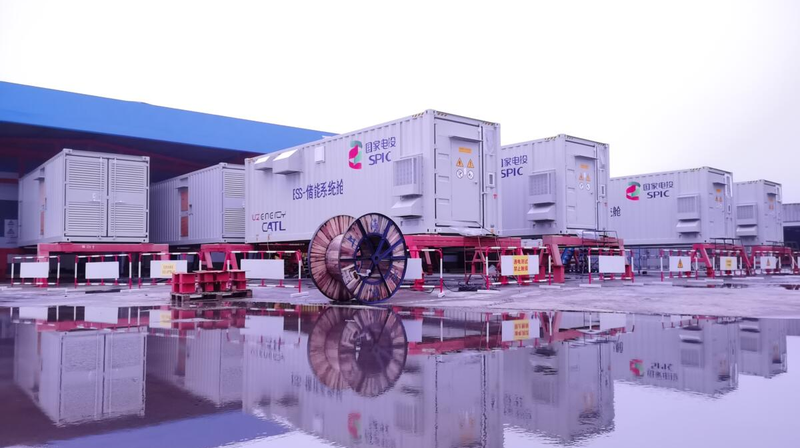
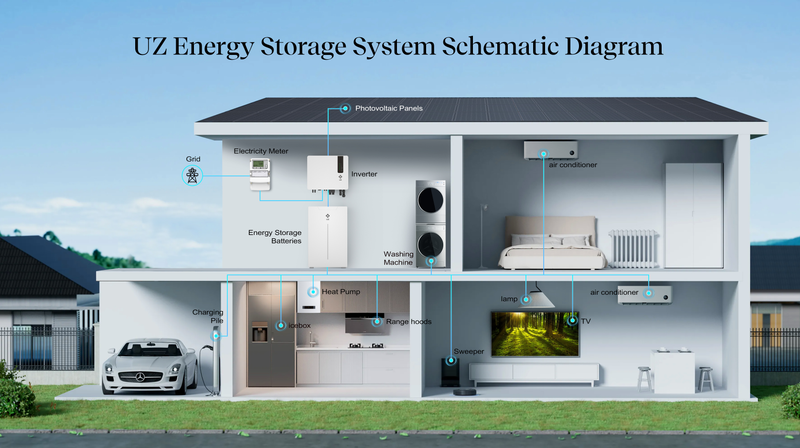
UZ Energy provides energy storage solutions for residential and commercial and industrial (C&I) applications, supporting practical solar-plus-storage scenarios where safety, reliability and system integration are essential.
About Intersolar Europe 2026
Intersolar Europe is one of the world's leading exhibitions for the solar industry. In 2026, it will take place as part of The smarter E Europe, Europe's largest alliance of exhibitions for the energy industry.
The smarter E Europe combines four parallel exhibitions: Intersolar Europe, ees Europe, Power2Drive Europe and EM-Power Europe. Together, the platform covers solar power, battery storage, EV charging, smart grids, energy management and integrated energy solutions.
The 2026 edition of The smarter E Europe is expected to bring together around 2,800 exhibitors and more than 100,000 visitors across 200,000 square meters of exhibition space. Intersolar Europe alone is expected to host around 1,300 exhibitors, with more than 1,500 suppliers presenting solar energy products and services across 101,000 square meters.
This year also introduces a new schedule: Intersolar Europe 2026 will run from Tuesday to Thursday, June 23–25. The conference program will take place from June 22–23 at the International Congress Center Messe München, focusing on PV markets, technologies and project financing.
The broader theme of The smarter E Europe is “Accelerating Integrated Energy Solutions.” This reflects a clear direction for the industry: solar, storage, e-mobility and energy management are increasingly becoming part of one connected energy ecosystem.
From Solar Growth to System Value
For many years, the European solar market was measured primarily by installed capacity. That metric remains important, but it no longer tells the whole story.
As solar generation continues to grow, energy systems face new challenges. Solar output is strongest during daylight hours, while electricity demand often peaks later in the day. In some markets, high midday generation can result in grid congestion, curtailment or reduced export value. At the same time, electrification is changing how energy is consumed, with EVs, heat pumps, air conditioning systems, industrial equipment and smart devices increasing the need for greater flexibility.
This is why energy storage is becoming central to the next phase of solar development.
Battery energy storage systems (BESS) help shift renewable electricity from the moment it is generated to the moment it is needed. They can improve solar self-consumption, support backup power, reduce dependence on grid electricity during peak periods and strengthen overall energy resilience.
The conversation at Intersolar Europe 2026 is therefore not only about generating more solar energy. It is about making renewable energy more usable, more predictable and more valuable across residential, commercial and industrial applications.
Regulation Is Raising the Bar for Battery Storage
Procurement decisions in Europe are becoming increasingly demanding.
In March 2026, the European Commission proposed the Industrial Accelerator Act, a framework intended to strengthen industrial capacity and decarbonisation across strategic sectors. While still under negotiation, the proposal reflects a broader policy direction: public procurement, subsidies and supported projects are placing greater emphasis on industrial resilience, supply chain transparency and manufacturing capacity.
At the same time, the EU Battery Regulation (EU 2023/1542) is moving battery products toward stricter requirements for sustainability, product information, traceability and lifecycle responsibility. Carbon footprint requirements for rechargeable industrial batteries began to apply from February 18, 2026, while battery passports for rechargeable industrial batteries above 2 kWh and electric vehicle batteries will become mandatory from February 18, 2027.
For distributors, installers, project developers and end users, battery selection is no longer based solely on price, capacity or availability. Documentation, compliance readiness, product transparency and long-term support are becoming increasingly important factors in procurement decisions.
As energy storage moves from optional equipment to a core component of modern energy infrastructure, these requirements are expected to play a larger role throughout the industry.
Hybrid PV Systems Are Becoming a Key Industry Focus
One of the key industry topics ahead of Intersolar Europe 2026 is the development of hybrid PV systems. These systems combine solar generation, battery storage and grid interaction within a unified energy architecture.
The concept is straightforward. Solar power can generate large amounts of clean electricity, but without storage and intelligent control, that energy is not always available when demand occurs. By integrating batteries into PV systems, energy can be stored and used later when consumption increases, grid conditions change or electricity prices make self-consumption more attractive.
This trend is visible across both utility-scale and distributed energy projects. Large hybrid systems can help reduce renewable energy curtailment and support grid stability. Residential solar-plus-storage systems can provide homeowners with greater energy independence. Commercial and industrial projects can benefit from load shifting, backup capabilities, peak demand management and improved operational resilience.
For installers, system integrators and project owners, this creates a new set of priorities. The market increasingly requires battery products that are safe, reliable, easy to install and ready to perform in real-world project environments.
UZ Energy and the Next Stage of Energy Storage
As solar deployment matures across Europe, energy storage is becoming an increasingly important link between generation, consumption and energy management.
For homeowners, battery storage can increase solar self-consumption and provide backup power when grid interruptions occur. For commercial and industrial users, storage can support load shifting, peak demand management and more resilient energy operations.
UZ Energy develops LiFePO4-based battery energy storage solutions for residential and C&I applications, with a focus on practical deployment and long-term performance. Rather than serving as standalone equipment, modern battery systems are increasingly expected to work alongside solar PV, EV charging infrastructure and intelligent energy management platforms.
As a result, project requirements are evolving. Beyond capacity and performance specifications, buyers are paying closer attention to installation efficiency, system compatibility, technical documentation, compliance readiness and long-term service support.
As integrated energy applications continue to expand, UZ Energy aims to provide storage solutions that are straightforward to deploy, adaptable to different project environments and designed for reliable operation over the long term.
Supporting Europe’s Evolving Energy Landscape
Europe’s energy transition is increasingly becoming a question of system integration rather than generation capacity alone.
As solar power, battery storage, EV charging and energy management technologies become more interconnected, the industry is placing greater emphasis on flexibility, reliability and real-world usability.
In this evolving landscape, battery energy storage systems (BESS) are expected to play a growing role in helping households, businesses and energy operators make better use of renewable energy.
At Intersolar Europe 2026, UZ Energy looks forward to engaging with customers, partners and industry professionals to discuss how practical energy storage solutions can support the next generation of solar-plus-storage applications.
Visit UZ Energy in Munich
UZ Energy welcomes customers, partners and energy professionals to visit us at Intersolar Europe 2026 in Munich and learn more about our energy storage solutions for residential and commercial and industrial applications.
Event: Intersolar Europe 2026, part of The smarter E Europe
Conference: June 22–23, 2026, ICM München
Exhibition: June 23–25, 2026, Messe München
Booth:C2.634
Wherever you find your energy. Shine On.