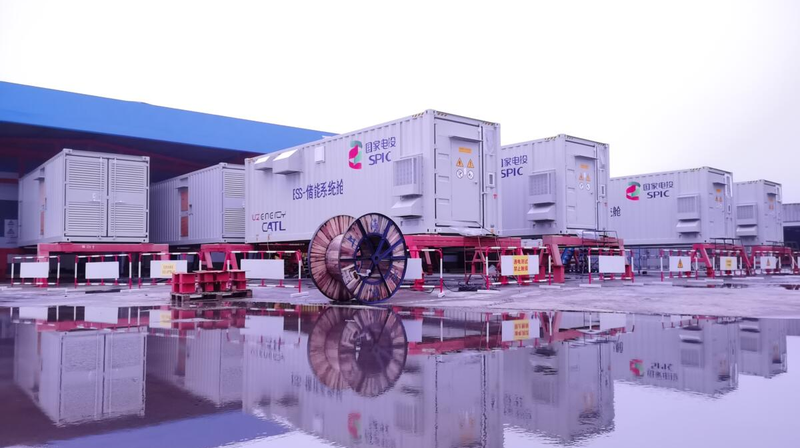
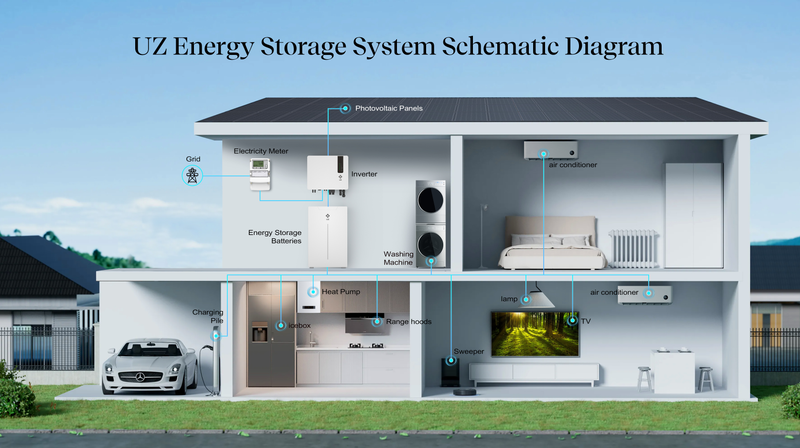
Battery hardware determines the physical envelope: power, energy, efficiency, thermal limits and degradation. Software determines how much of that envelope can be used at a particular moment, for which objective and under which market or site constraint.
 The home energy storage industry has spent the better part of a decade waiting for battery prices to fall far enough. They have — and it turns out that was never really the point.
Lithium iron phosphate cells have dropped roughly 90% in cost since 2010. Manufacturing capacity has expanded so aggressively, particularly out of China, that module prices have since fallen to record lows below $50/kWh. By any measure, the hardware problem is largely solved. Yet residential storage adoption in most markets still trails projections, while in a handful of others it has exploded in ways that have little to do with battery economics at all.
The difference, almost everywhere you look, comes down to one thing: what electricity actually costs at the moment you use it.
The Price Signal Is Getting Louder
For most of the twentieth century, electricity pricing was designed to be boring. Utilities charged flat or mildly tiered rates that smoothed over the real volatility of the underlying wholesale market. Consumers had no reason to think about when they used electricity, only how much. That system made sense when generation was controllable and demand was predictable.
Neither of those things is true anymore.
Solar has fundamentally changed the shape of electricity supply. In South Australia — one of the world's highest per-capita solar markets — wholesale prices were negative for 25% of all trading intervals in 2023, rising to 34% in the December quarter alone. During daylight hours specifically, negative prices occurred more than 60% of the time. By early evening, as the sun drops and air conditioners stay on, the same market can clear at ten to fifteen times the midday price. In Germany, where households pay among the highest electricity rates in the developed world — around €0.42/kWh on average in 2024 — the spread between the cheapest and most expensive hours on the EPEX day-ahead market regularly runs to several multiples of that figure, and spiked above €2/kWh during a technical exchange fault in June 2024. In California, NEM 3.0 — the solar export policy that took effect in April 2023 — cut the value of feeding energy back to the grid from roughly $0.30/kWh to $0.08/kWh, a 75% reduction that effectively ended the simple "install panels, earn credits" model and forced homeowners to think seriously about storage for the first time.
These are not distant signals. They are structural changes to electricity markets that are already repricing the value of stored energy in real time.

A Battery Is Now an Arbitrage Tool
The traditional pitch for home storage was defensive: keep the lights on when the grid goes down, or use your own solar instead of selling it cheaply. Both arguments still hold. But in markets with meaningful time-of-use tariffs, a third value proposition has quietly become dominant — one that looks less like insurance and more like active financial management.
A homeowner on a dynamic tariff in the UK, Germany, or Australia is now facing a genuinely different economic problem than their counterpart on a flat rate. The question is no longer just "how much electricity do I use?" but "when do I buy it, and from where?" A 10 kWh battery charged during a low-cost or negative-price window and discharged at the evening peak can generate meaningful savings independent of whether the homeowner has solar at all. In Australia, participants in the SA Virtual Power Plant program — a joint initiative between AGL, Tesla, and Energy Locals — report annual bill savings in the range of $250 to $575 AUD, according to program data. That range will widen as tariff structures sharpen and more households gain access to wholesale-linked pricing.
This reframes the storage ROI calculation entirely. The question is no longer just "how long until this battery pays itself off in avoided grid costs?" It is "how well can this system trade electricity, and who is doing the trading?"
The Hardware Is Table Stakes. The Software Is the Moat.
Here is where the industry's competitive dynamics get interesting, and where most consumer-facing coverage still misses the story.
Battery cells are a commodity. A 10 kWh LFP pack from a tier-one supplier is not meaningfully different whether it carries a European brand name or ships under a lesser-known Chinese label. Inverter efficiency has converged. Warranty terms have largely standardized. The physical product has become, in the language of strategy, table stakes.
What has not converged is the intelligence layer on top.
An energy management system that can accurately forecast tomorrow's wholesale price, model the household's expected consumption curve, account for the battery's state of health and remaining cycle life, and solve for the optimal charge/discharge schedule is genuinely difficult to build. More importantly, it is difficult to replicate once it has accumulated real operational data. Tesla's Autobidder, which aggregates residential Powerwall units into grid-scale virtual power plants, has logged more real-world dispatch data than any competitor simply by virtue of fleet size — AGL's acquisition of Tesla's South Australia VPP in 2025 brought roughly 7,000 Powerwall systems under a single management platform. Sonnen's ecoLinx system takes a different bet: deep integration with smart home loads rather than market participation. Neither approach is clearly superior. But both companies are betting that the differentiation lives in software, not cells.
The uncomfortable implication for most of the industry is that companies which have competed primarily on hardware specifications — capacity, round-trip efficiency, warranty length — are building on ground that is eroding. The customer who once chose a battery based on kWh per dollar is increasingly choosing based on what the system can do with those kWh.
Bigger Is Not Always Better
One of the more counterintuitive findings to emerge from markets with mature time-of-use pricing is that oversizing a battery does not reliably improve returns.
The logic seems obvious at first: more storage capacity means more energy shifted from cheap hours to expensive ones, and therefore greater savings. In practice, it depends entirely on the shape of the price curve. If the windows where prices are genuinely elevated are short — which is the case in many European markets outside extreme weather events — a well-sized system can capture essentially the same economic value as one twice as large, because the binding constraint is time, not capacity. The larger battery sits partially discharged, cycling less, and delivering a worse return on capital.
This matters more than it sounds. It means that storage system design in high-dynamic-pricing environments should be driven by local tariff data, not by backup-power rules of thumb. The right battery size for a household in Munich is a different calculation than the right size for a household in Phoenix, even if the two homes are identical in every other respect. As dynamic pricing becomes more widespread, the industry's default practice of sizing batteries around outage scenarios is likely to give way to something more granular — and more data-driven.
Who Wins, and Who Is Already Losing
The clearest signal of where this market is heading may be California. Under NEM 3.0, the share of new solar installations paired with battery storage jumped from roughly 11% before April 2023 to nearly 70% by the end of 2024. Homeowners did not suddenly discover a love of batteries — they responded to a price signal. When the economics of exporting solar collapsed, storage became the only way to preserve the value of the panels they had already bought. One policy change restructured the purchasing decision for an entire market within eighteen months.
Germany is running a slower version of the same experiment. Dynamic tariff products became legally mandatory for all suppliers in January 2025, but smart meter penetration remains low and surveys suggest over 80% of households still feel poorly informed about how these tariffs work. The infrastructure preconditions are being assembled, but consumer behavior has not yet shifted at scale. That gap between regulatory intent and real-world adoption is where the next wave of market opportunity sits — and where the companies with the best software will have the most to gain, because the value of optimization is highest precisely when consumers are most confused about pricing.
The companies most at risk are those still treating software as a secondary feature — something bolted onto a hardware product rather than the product itself. A battery that ships with a basic app and a fixed charge schedule was a reasonable offer in 2019. In a market where the spread between cheap and expensive electricity can move by an order of magnitude within a single day, it is increasingly an offer that leaves money on the table for the customer, and margin on the table for the competitor with better algorithms.
The broader shift is already visible in how the leading players talk about their business. The pitch is no longer "our cells have better chemistry." It is "our system learns your home, predicts the market, and trades on your behalf." That framing would have sounded premature five years ago. Today it is a description of products already deployed at scale. The hardware race is largely over. The software race is just getting started.